
What should I expect from a College Education?
By Jerry Kranitz (December 24, 2025)
Our institutions of higher learning have taken a beating in recent years. This has occurred for a variety of complex and often controversial reasons. Based on personal experience, I have strong opinions about what students should take away from a college education. And it goes well beyond hard skills and specific programs of study. Without regard to controversy or partisan bias, I’d like to share some thoughts. Read on…

College is expensive!
In a former life I spent four years as a bill collector. Our clients were student loan guarantors, and I collected on defaulted student loans. That job made me sensitive to the debt that American students take on, and far too often with no degree to show for it.
To take one cost example, tuition for the 2025-26 academic year at the Harvard Business School MBA program is $78,700. And that’s tuition alone. Pause on that figure.
As Dennis McCarthy, VP for finance at Thomas Aquinas College says, “In our volatile economy – where we can’t even predict which jobs humans will still be working in six months, let alone in ten or 25 years – building a college education around the momentary needs of an ever-shifting marketplace is a fool’s errand. Many professions that a college can train students for today will be obsolete tomorrow, and the typical business professor can no better predict the job of tomorrow than any of the rest of us can.”
McCarthy then swoops in with a zinger: “Perhaps the purpose of higher education, at least initially, shouldn’t be to pass on a fixed set of job skills, but to form the intellect, so that students are equipped to learn the skills for any job they seek.”
Learning how to learn
I pursued a university degree after determining that the bar/restaurant business wasn’t for me. This was a decade after I graduated from high school. At the University of Wyoming, I stumbled into what I would describe as a specialized version of what historically was known as a ‘liberal education’. I was an International Studies major with a regional focus on the Soviet Union and Eastern Europe. (I’ve dated myself by revealing the Soviet Union existed at the time.) The coursework involved classes from the social sciences – political science, economics, sociology, history, geography, and Russian language.
Most of my classes involved research projects and producing papers. I grew to love diving into the deep end of research. Digging into a topic, determining my approach, gathering up sources, reading, writing, and refining until I had produced the paper I would turn in. It required thinking, thinking, and THINKING. I figured all this out by doing it… repeatedly. And in so doing, I learned HOW to learn.
Dartmouth history professor Cecilia Gaposchkin explains that a Liberal Arts education “teaches you how to use your thinking, and the skills acquired in honing your thinking (reading, writing, numeracy, analysis, synthesis, the persuasion of ideas, and the creative application of knowledge), in novel and creative ways, to solve problems and imagine new possibilities. That is, how to be nimble and creative.”
It’s the SOFT skills!
Prior to retirement in late 2024, I spent 28 years working in the technology division of a company that I felt fortunate to work for. I advanced from Technical Support to Quality Assurance Manager, then managed a team of Business Analysts, and at retirement I was the technology division Product Owner.
I used to joke with my manager that I was the least technical person in technology. And it was true. But I succeeded and continually advanced for a handful of fundamental reasons, much of which I attribute to the soft skills I acquired during my college years.
Flexibility
I never got overly hung up on my job title or description. I did get obsessively hung up on what it took to get the job done. Think broadly, consider the possibilities, think on your feet. And be willing to do whatever it takes to get the job done. Believe me, those qualities get noticed. Juggling my university coursework and managing research projects taught me the benefits of flexibility.
Communication
I understood the importance of TALKING to people. This included being sensitive to how I communicated, whether in face-to-face communication, emails, memos or documentation. This often required pulling people together and making communication happen. One of my earlier blog articles is dedicated to the topic of communication. The give-and-take interaction with professors and classmates at school, as well as the written work I had to produce, taught me a lot about both verbal and written communication.
Leadership – Teamwork
Few people work in a bubble. In a professional environment, you are likely part of a team. You can be a leader, even if not in an explicit management role. Speak up and present ideas as springboards for discussion. Somebody needs to take the lead in the interest of problem solving and moving things forward. But it’s not about you. It’s about getting the job done. You’re part of a team.
In classes at school, I was ‘that’ type of person who sat in the front row, frequently raising my hand and asking questions. It got conversation going. And everybody benefitted.
Critical Thinking
I’ve said enough about thinking. I just wanted to repeat it.
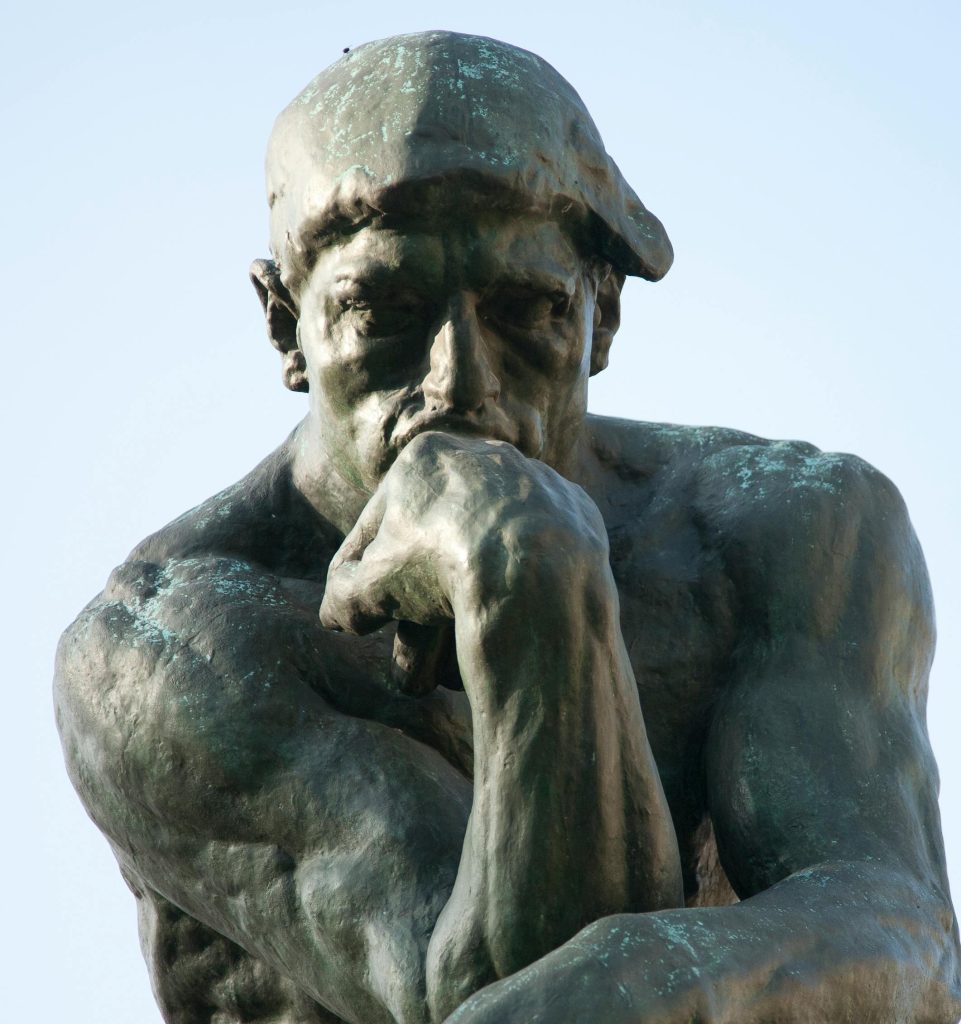
This all may seem ridiculously basic. But if you understand these fundamental points, the world is your oyster. And I credit much of it to the soft skills I acquired during my college years.
For your consideration…
I should emphasize that I am not making a case for students to pursue Liberal Arts degrees. I am, however, arguing that whatever the course of study, higher education must challenge students to excavate, analyze, think critically, and produce results. Research drawn on Wikipedia pages and ChatGPT falls short of this challenge. Students must get their hands dirty among the sources.
But it’s not all the responsibility of our institutions of higher learning. Students must extract value on their own initiative. As Professor Gaposchkin further says, “A liberal arts education, done right and undertaken with enthusiasm, curiosity, and passion, makes you smarter.”
Let me rephrase that: Education, undertaken with enthusiasm, curiosity, and passion, positions individuals to think broadly, be creative problem solvers and, consequently, to be of the highest value to prospective employers and… to themselves.
Speaking from personal experience and decades of hindsight, it didn’t matter that I wasn’t employed in the International Relations field. I used my education every day of my professional life. And I continue to do so in my personal life. I even used the skills I learned in college to write a history book!
Don’t go to college just for the degree. It may well benefit you. But you would be short-changing yourself. Not just in the career world. But in life.